Luck of the Draw.

        Image result for dirty harry 

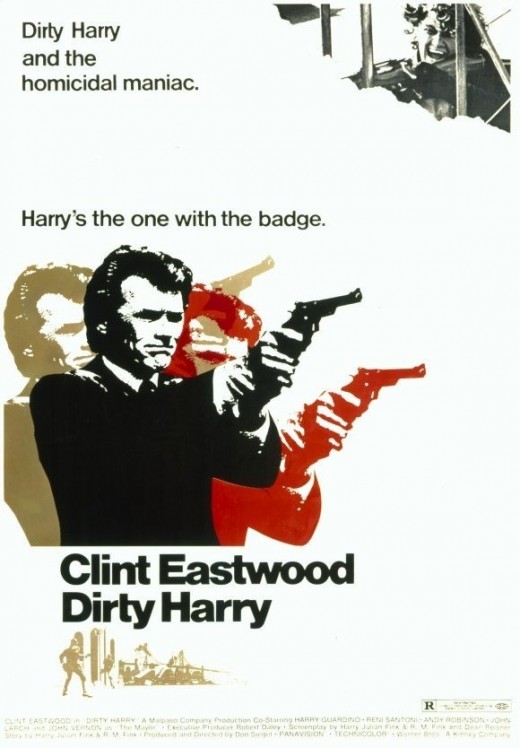
       “You’ve gotta ask yourself one question; Do I feel lucky?… Well, do ya, punk?” I’ve always wanted to see the movie with that line from it and I finally did. Dirty Harry is a gritty little movie, starring the sharpshooting Clint Eastwood as Harry Callahan, as he plays a police inspector with a hair trigger and no regard for the life nor rights of criminals, as it should be. In the beginning of the movie, Callahan is just trying to enjoy his breakfast at the local coffee shop, when a 211 breaks out (armed robbery). In classic Eastwood style, he saunters out of the shop, pulls out his .44 magnum and starts letting off at the first robber. He pops the getaway driver, his friend and walks up on one of them, who was shot in the arm. In arm’s reach is the robber’ s shotgun and he eyes it but Callahan points the .44, saying “I know what you’re thinking. Did he fire all 6 shots or just 5? Well, to tell you the truth, in all this excitement, I’ve kinda lost track myself, but being this is a .44 magnum,  the most powerful handgun in the world, and will blow your head clean off, you gotta ask yourself one question…” The robber quits but asks him if he had another bullet, to which Callahan points his .44 and pulls the trigger, the click loud and true. Callahan is a Grade A bad-ass and isn’t afraid to break all the rules in history.

Image result for dirty harry
“You don’t assign him to murder cases… You just turn him loose.”

          The main plot consists of a deranged, sadistic murderer, calling himself “Scorpio” (Andrew Robinson), using his “hobby” to get the mayor of San Francisco (John Vernon) to pay him $100,000. The Mayor folds immediately, alongside the chief of police (John Larch) as they get word that he kidnappped a girl and told the police that he will release her whereabouts if they get someone to give him the money, abiding by his rules. Callahan decides to be the paper boy, ready to put this guy 6 feet under, but when he meets up with Scorpio, Scorpio decides to change his plans & kill Callahan. Luckily, he had his newest partner, Chico Gonzalez (Reni Santoni), trailing him to ensure his safety, who gets shot by Scorpio in a shootout, allowing Callahan to injure Scorpio with a knife to the femur. He hobbles away in excruciating pain and goes to the hospital, in which the police find his address and Callahan catches him there, chasing him to the football field. After shooting him and torturing him to find the girl, he tries to say he has rights and he wants his lawyer, all going into Callahan’s left ear and out his right. He confesses but when they find the girl, she’s already dead. After he is detained, Callahan is brought into the DA’s office (Josef Sommer), scolded for violating Scorpio’s rights and informed that because of that, he’s gonna walk away a free man. Steaming with anger and justice, he stalks Scorpio, trying to find a way to end his reign of terror and keep his badge. Ultimately, he realizes that it’s impossible to do both.

Image result for dirty harry
Wolverine with a .44 Magnum.

             After framing Callahan for beating him up, Scorpio commits a litany of other crimes, including robbing a liquor store, assault, and more kidnapping and he takes a bus full of kids hostage, along with their bus driver. Done with the broken legal system and taking matters into his own hands, Callahan finds the kidnapped bus somehow and appears on top of a train track, jumping down onto the bus, and doing it in the most badass way possible. After he gets the bus stopped and a quick shootout with Scorpio, he has him dead to rights, in the same situation as the opening scene. So he recites his monologue motto, with more rage and emphasis than the first time. But this time, the criminal thought he was lucky. Too bad he wasn’t, because Dirty Harry put one right between the numbers, blowing him into the lake and drowning him in his own sin. This film is probably not a noir to some at first glance, but if you take a longer look, you’ll see that it’s a lot like Murder, My Sweet and other early noirs, with the detective point of view, muddled lines between justice and injustice, coupled with murder, sex, & existential dread. If it was in black & white, you wouldn’t question its noir tone, which makes into fall into the category of a neo-noir.

Image result for dirty harry

Image result for dirty harry

Image result for dirty harry


Image result for dirty harry
Found a bunch of Dirty Harry artwork soooo, here.

99 River Street

I enjoyed this film a lot.  It was the first hint of sports in a film noir for the first time in this class.  I really like the plot and how the movie had police after one guy, who was after another guy.  It gave me the idea that there were two protagonists in this film and we were waiting to see which one would be brought to justice first.

I really liked how this film had two of everything.  Two boxers in a match started the movie.  Two characters (Ernie and Victor) were being chased for crimes.  Two women (Linda and Pauline) were involved with Ernie.  This movie also featured two different lives of Ernie.  Once a knockout punch boxer, he loses a match and becomes a cab driver, which he was told he would the week after he lost his fight.  From the first scene where they show the boxing movie, I was curious to see how the movie panned out.

One thing I really enjoyed about the movie was small flashback scene toward the end.  Except for one thing, it wasn’t a flashback we were used to seeing in film noirs.  Ernie, who had been shot by Victor who is trying to escape by cruise ship, didn’t want to lose another fight.  He didn’t want to let Victor get away with pinning the murder of Pauline on him.  I loved how the flashback audio of the fight at the beginning of the movie played and it gave motivation to Ernie to get through the pain and finish off Victor with a knockout punch.  I loved the scene because it was a small flashback and it brought the whole movie together that the first scene audio was used to finish one of the last scenes when Victor is brought to justice.  Ernie got his motivation from the painful defeat that got him into the mess of being framed for the murder that ended up in the back of his cab.

99 River street was another noir that strongly showed the characteristics of murder, romance, and police investigation.  As mentioned earlier, there were two of everything that brought out these characteristics in this movie.  One thing that was confusing to me during the movie is how Ernie didn’t seem to know that Pauline was dead or, how did she get into the back of his cab also.  It all kind of happened quick when Ernie got a drink, and Ernie just went about his everyday cab driving without it being noticed.  I found this to be confusing and odd.  For me, it added more excitement to the film because one the search is on for Ernie, everyone but Victor and the police are helping Ernie stay hidden so he can reverse the framing of the murder on himself.

Image result for 99 river street linda
Steamy photo of Linda trying to persuade Victor outside where Ernie is waiting to bring him to justice.

I thought the end of this movie was great.  Ernie wants to box again but he is told he wouldn’t have his timing down unless he worked at it for months.  I felt this was more motivation for him to find Victor and get the truth out that Victor murdered Pauline, and not Ernie.  Ernie is then caught in a jam where he is grabbed by the people Victor sold the diamonds to.  Enter, Linda.  She enters the bar and starts dancing around and we get this seductive photo above of her trying to move Victor outside where Ernie will stand and grab him and get the truth out.  When that didn’t go as planned and Victor gets away,  I thought the movie would end with Ernie being arrested for the murder and Victor would escape on the cruise ship.  I just had a strong feeling that Ernie would gain the motivation to do something in his power to not allow Victor on the ship.  With the bullet to the arm and no sign of the cops yet, I thought he was going to get away.  Then, when Victor beats Ernie down, I really thought he would get away.  Once the flashback voice over of the boxing match from the first scene started playing, I knew this movie was about to change and something would happen.  As far as predictions go, I thought Ernie would knock Victor into the water with a punch, I didn’t think Ernie would be relieved of catching Victor by the police.

On The HUSH HUSH…

Image result for l.a. confidential


Once again, I am blown away by the greatness of our must recent showing. L.A. Confidential was a star-studded, slick, & deep powerhouse of a film that captured the struggle of fighting people on the same side of the law (in the public’s eye). Not only was it a fresh change from the “black & white” noirs, masterpieces nonetheless, but the level of cinematography & plot complexity was also a step above from what I’ve seen. There are old noirs with pretty complex plots but they’re usually muddled and you’re still a little confused at the end of the movie, but L.A. Confidential’s plot was precise and concrete, and it was wrapped up very nicely into with a black bow on top. In terms of entertainment, Dead Men Don’t Wear Plaid still holds the crown but when it comes to sheer theatrical captivation mixed with just the right amount of humor, shock, twist, awe, & finishing ability, L.A. Confidential is the big fish.

Image result for l.a. confidential
The whole “gang”


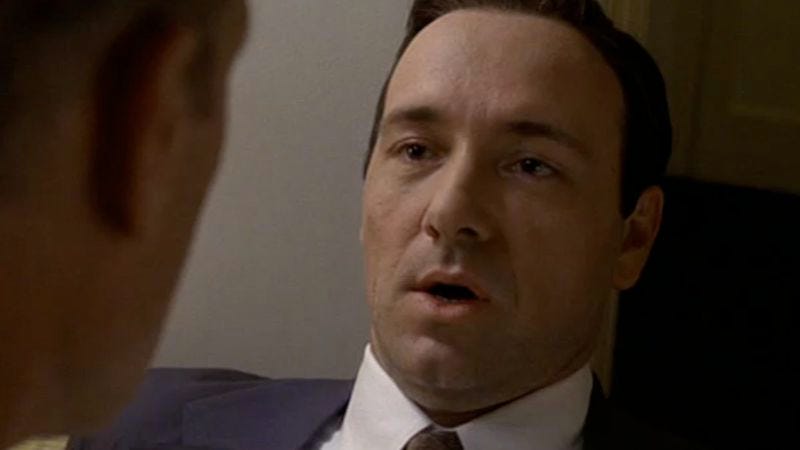
The story follows the famed L.A. police department in the 50’s, portrayed in many movies. Four officers, Bud White (Russell Crowe), Edmund J. Exley (Guy Pearce), Jack Vincennes (Kevin Spacey), & Captain Dudley Smith (James Cromwell). A tabloid writer, Sid Hudgens (Danny DeVito), has ties with Vincennes as he feeds him stories to write about for his tabloid, Hush Hush. After a vicious and brutal massacre at a local coffee shop, with a death toll of 5, including partner to Officer White, Officer Stensland (Graham Beckel), secrets are coming forth in small hints. Exley decided to testify against the officers of the incident referred to as “Bloody Christmas,” as they misused their power of authority. Now disliked by almost all cops in the precinct, White being the one to dislike him the most. Not only does he snitch but he also beds a prostitute that White had fallen in love with, Lynn Bracken (Kim Basinger). Pierce Patchet (David Strathairn) plays a role as the slick rich guy who partakes in illegal doings. But in the wake of multiple dead criminals apart of Mickey Cohen’s (Paul Guilfoyle) drug ring, some old ones are found carrying deep secrets. The first to get a real lead is Jack Vincennes, that lead him to find out that Captain Smith was behind the killings as he was preparing to take over the drug ring. Unfortunately, Smith notices and shoots Vincennes in the heart before he could leave. Before his last breath, Vincennes says “Rollo Tomasi,” the fake identity Exley made up for his father’s killer. During the briefing the next day, as Smith breaks the news to the precinct, he asks Exley about “Rollo Tomasi.” Knowing immediately that only Vincennes knew about him and realizing that Smith is the mastermind behind everything, he recruits White to help him gather evidence and catch Smith. But Smith gets wind of this and starts tying up loose ends, killing Patchet, and sending a hit squad after the duo.


Image result for l.a. confidential
When you get caught in the act…

After a serious shootout, White getting shot in the face after they both killed at least 12 men in self-defense, Smith shows up to finish his work and take the credit. But instead Exley shoots him in the back and he dies a hero in the public’s eye, alluding to a question that Smith asked Exley in the beginning, “Are you willing to shoot the guy you know is guilty in the back for the greater good?” Exley receives a Medal of Honor for his bravery in the line of duty, and White goes home with his girl, the prostitute. The quality of this movie is a solid “A” with stars left and right, a grand movie of its time. In terms of noir elements, the only one that’s not relevant is the visual “black & white.” All the other elements, such as the police/ law against the bad guys, but only to figure out that the real bad guys were right next to you the whole time, the feeling of death and dread at every corner. I feel as if there was a hint of the “homme fatale” in Captain Smith as he never hesitated to kill someone for his own gain. Another noir element that is present is the obscurity of good and bad, when morals themselves are questioned, exposing the underside of society.

Image result for l.a. confidential


The New Gaurd and Rolo Tommasi

The three man hero’s of this story are relatively new guard on the police force. Edmund J. Exley played by Guy Pierce, Wendell Bud White Played By Russel Crow, and Jack Vincennes played by Kevin Spacey are at least new compared to to they old crew of cops who they eventually find out they’re contending with. A major theme in this movie seems to be correcting the mistakes of our ancestors. Learning from the mistakes of the past generations. Each of our main hero’s are revealed to have a vendetta and or chip on their shoulder that drives them and fuels them. 

In this movie, straight shooting Exley finds him self in a position where he can clean up the old guard while maintaining their integrity and find himself promoted to sgt detective, where he can get some real work done. On the night when he was designated to be temporary watch commander he become witness to an episode that was completely representative of the corruption and crookedness going behind the scenes in the police department(police brutality, exploitation off power). Outnumbered to treat the symptomatic outburst at the time, he found himself in a position to make a political move to clean house of some of the corruption and move ahead in his career. (At first when watching this, he kind of seemed like a suck up, but later on, upon learning his motivations and goal it all made sense). So he worked out a deal to get rid of some of the cops that were ready for retirement that had pensions lined up and also got a corroborating witness(Jack Vinccense) to take a piece of the fall. When this promotion leads to an investigation of a homicide case(the Nite Owl Case) and then leads to a literal badge of honor but an eventually more suspicion as well, Exley Bud White and Jack Vinccense are lead down a rabbit hole of corruption in the police force. 

As said before, each one of these “heros” seems motivated by an inner struggle that they need to solve. First is Jack vinsence. Jack Vinsnce has long since sold his sole for the glamour of Hollywood. He gets tips from a sleazy Hollywood reporter, Sid Hutchins(Danny Divito), to pursue meaningless celebrity crime  that looks good for a show that depicts new and juicy crime cases. It’s all a front to entertain and has no real meaning to it. So Vincennes career is basically shallow and meaningless for all the money, fame and glamour it affords him. So when Jack is presented with a mission that will actually do some good (corruption in the Nite Owl Case) he takes the opportunity. Do to the chip on his sholder to actually do some meaningfull work he becomes the first person to get the main lead to the actual purpitraders, before he is killed by the main culpret. But he notably achieves the  redemption of his soul when he says the name “Rolo Tomassy”. It leads to to the revelation by Eckley that Dudely Smith is the perpetrator. His final scene charterizes his creed to a tee. “What’s this all about Boyo? Dudley asks.

“Part of it has to do with a murder.” Responds Jack.

“You’re a Narco Jack, not Homocide. Since when do you work with Edmund Exley?”


“Well it’s a private investigation.” 

“Oh?” He provokes mockingly

“Well I messed something up, I’m trying to make amends,”. He means makes amends with his career’s dignity and that of his soul.

“Don’t start trying trying to do the right thing now Boy-o, you haven’t had the practice.” And he is correctly alluding to his shallow career…

The next character to note that is motivated by an inner struggle is Bud White. Bud White watched his mother get beaten to death by his father with a tire iron. So the only thing that can fill the hole in his heart is to kill and incarcerate as many women beaters as he can. He plays the key role that is most understated in the taking down the old guard of corrupt cops. He is the one who first pursues his inkling of doubt that there is nothing fishy going on with the Night Owl Case. He is also the one that prevents Dudley from killing Eckley and “getting away with it.” So he is driven by the redemption of his heart that was broken when his father killed his mother, and he uses that drive  as the most fierce weapon in the fight against the evil of his predisesors. The only down side to wearing his broken heart on his sleeve is that he is easily deceived, but the person who deceives him, often pays a heavy price for their dishonesty.

     The last person to not that is motivated by an inner struggle is Edmund J Exley. Exley’s father was a police officer Sgt. detective as well. When Exley was a kid, his father was killed by a purse snatcher that was never brought to justice.  No one every found out who he was and why it happened. So this eternal inconsistency in logical justice, gave Exley the powerful motivation to bring justice to the world around him and ultimately resolve the unfathomable death of his father. So he in a way wants to make right this inconsistency of justice in his head. He even made up,in his head, a name of the unidentified killer to give him some place to start. So to him there is a inconsistency in his brain and his belief in justice that creates cognitive dissonance, and the only way of which he can calm that,  is by ringing out justice within the corrupt police department. He is esentially the Catalyst. He enlists the power and driving forces of the two other men, for good. He is also the one who manages to use his brains and cleverness to maintain the integrit of the force while riding it of the corrupt and downtrodden ways of the old guard. So he simultaneously honors and corrects the past generation of their sin. It reminds me of a late famous story teller I once knew who went by the name of The Old Grey Goose. He would restite a poem that went something like this: 

“hold high the torch, for you did not light its glow, ‘twas lit by others you know…” 

L.A. Confidential

I thought I’d been totally turned off from film noir movies filmed in color after I saw Against All Odds but L.A. Confidential totally changed my point of view. Action-packed and full of drama, L.A. Confidential impressed me in more ways than one. With a great set of actors perfectly cast for their roles and an interesting plot, this film emulates everything that’s good about noir while also incorporating aspects of the contemporary.

91S3RF02mWL._RI_SX200_

The story unsurprisingly takes place in Los Angeles and follows the narratives of three very different cops through the seedy underbelly of sunny L.A. where police corruption and Hollywood sleaze runs rampant. Ed Exley (played by Guy Pearce) is eager to get ahead, but not at the cost of breaking the law; Bud White (played by Russel Crowe), has had a hard past and uses his strong sense of right and wrong (as well as his fists) to guide justice rather than relying on the law; and Jack Vincennes (played by Kevin Spacey), has his mind on getting his picture in the paper and making a quick buck, that is until his conscience drives him to join Exley and White down the one-way path to find the truth behind the dark world of L.A. crime.

aqvpvxbv4zdujdcafnqy

As with all noirs, the cinematography is important and I found myself quite surprised how well director Curtis Hanson was able to compose the shots in a way that was quite obviously noir. It may just have been my surprise at seeing such a successful noir in color but regardless the film composition paired with the set/clothing of the 1950s really pushed it over the edge.

2015 National Film Registry

We’ve already talked about revivals and remakes needing to be transformative rather than a carbon copy of the original. I think L.A. Confidential does and amazing job of reaching this criterium as it adheres to some of the classic tropes of film noir but rather than relying on the war and other things like that to create its sense of gloom as we see happen with fifties noirs, L.A. Confidential turns to modern day issues facing our society, i.e. racism and police corruption, to give the film the dark mood that all noirs have. William Luhr touches on this subject, saying L.A. Confidential “explicitly condemns white racism and associates evil not with exoticized peoples from across the border but with the white power structure.” In other words the film has a sense of authenticity since it’s adding something new to the table and not just relying on the same old things to keep the wheel turning.

maxresdefault

L.A. Confidential is a great movie in its own right, which is probably why it’s a great noir too. In the fifties filmmakers weren’t trying to “make” noirs, they were just trying to make good movies that would sell well. The neo-noir movement had people bent on creating “noirs” rather than good movies that ended up being noirs. Thankfully, this wasn’t the case for L.A. Confidential, because watching the movie doesn’t give the impression of noir being forced on you or it being awkward, it’s just a good film that happens to be a noir too.

LA-Confidential-1037

L.A. Contradiction

For thousands of years, mankind fought to survive. The desire for self preservation put our species up against all other elements. We fought nature, desires, and even ourselves. But after the events of World War II, life was no longer about survival, it was about living. We had won “the war to end all wars” and humanity was finally able to kick back. Modern convinces made exhausting tasks easy and these conveniences were now affordable to the general population. Housing developments with white, picket fences and thriving communities began to sprout up all across the country.

Or at least that’s what THEY wanted you to think. Any television show from this era depicted the American family as successful and prospering. Father Knows Best, Ozzie and Herriet, and Leave it to Beaver showed happy families with trivial problems; happy, straight, WASP, nuclear families that promoted the aforementioned qualities.

The truth was that we were only being shown a fraction of our society. There were certainly some that would have liked reality to reflect these fictitious worlds, but just because you push for it doesn’t make it so. All across America, people were still suffering in masses. There were many that were being oppressed and underrepresented; perhaps even more so than before. Crime, corruption, and evil were just as prominent as before despite the mint green and powder pink coats. The end of the War only brought new and more complicated issues to the front. As much as people wanted peace, it wasn’t going to happen.

Nevertheless, media only showed us that fraction. If it didn’t meet their standards, it wasn’t shown on the screen. When Rod Serling was writing for television, he wanted to address relevant, social issues. Unfortunately, due to network restrictions, he was forced to disguise them by setting his stories in strange worlds and alternate realities. This ultimately led to the development of the Twilight Zone.

That’s why film noir is so special – it pushed those standards and showed some of the grit and darkness of reality. A few decades later and we are free to push even furtherr. That’s what makes L.A. Confidential so powerful (aside from just being an all-around gorgeous movie with a killer score and several interesting/motivated characters.) Johnathan Walker writes about its director, James Ellroy, saying that, “Historians subvert and manipulate the experience of time in the attempt to understand time. But, unlike Ellroy, they try to eliminate all contradictions, or relegate them to the footnotes, the formal equivalent of repressing them.”

Not everything is black and white (get it, because it’s a colored movie whereas most movies previously were black and white, BUT older movies also tried to make a clear distinction between good and bad whereas modern features blur the line. See what I did there? Black and White? Oof.) Ellroy’s characters and world have contradictions. The police are the “good guys” by typical standards but in L.A. Confidential they participate in a lot of shady activities, including the absorption of a heroin empire, the framing of minorities for murder charges, and just beating people with slapjacks to get confessions. The cops in this movie considered these methods a necessity to maintain order, and that mentality was one that actually existed at the time (you can argue that the mentality still exists in some facet.) The protagonists have contradictions too. The prostitutes are contradictions, dolled up to look like movie stars. The TOWN has contradictions for Christ’s sakes. It’s supposed to be the “City of Angels” with all the glitz and glamour of Hollywood, but instead we se the underbelly. Ellroy shows us the inner workings; the greasy gears and soot ridden machinery that keeps the golden empire turning. What’s more is that it’s all based in reality. He incorporates infamous characters and incidents to submerse the viewer in a fiction not too far from reality. And in all this contradiction we’re able to dig and discover for ourselves the truth of America’s history. We’re able to see the truth that was always there, but was hidden behind fixed smiles and floral dresses. It’s not straightforward and it’s kind of messy, but life is like that I suppose.

Cleaning Women

*Posted late with Permission

The 1940s and 50s, a simpler time. When Men were men, women were women, and the only thing that separated a bullet wound from a healthy arm, was a dame you could get to suck it out. In “Dead Men Don’t Wear Plaid” Rigby Reardon, a private eye(played by Steve Martin) needs to get to the bottom of a case that has seemed to have fallen in his lap. The Newspaper Reads “John Hay Forrest Killed In Accident Noted Scientist and Philanthropist Was Also a Cheesemaker and Father of Three”. Juliet Forrest, daughter of the deceased, has come to Reardon with the call to solve the case. Rigby is immediately smitten with her, but knows the number one rule for a hard boil cop is to not fall in love with clients. dead_men_don't_wear_plaid_us1sh

First off, I think it is notable to say that the reason this film hit so hard for us is that, we have obviously spent the last few months picking apart the aspects of classic film noir, so much so that no nuance or subtlety was lost on us. We are pretty much the ideal viewing audience. After developing a valid fluency over a relevantly short period of time, the movie became all the more hilarious. It seems as though  every look and glance made by Steve Martin as Rigby Reardon is a reference and ironic parody on the old hard boiled Film Noirs.

download (6)

The first scene when we are introduced to Rachel Ward as Juliet Forrest, she suddenly faints into Rigby’s arms at the sight of the news paper article outlining her fathers death. Steve Martin Catches her, looks around nervously, then shakes her. “In all my years I’ve never seen anything like her,”. He then looks around mischievously, and then plants one on her, in the guise of giving her mouth- to-mouth resuscitation. This joke, like when he chokes Juliet for saying “cleaning women”, works really well, because it plays on the misogyny of the characters in the old films. He portraits the outlook these men were supposed to have had on women at the time, but in a hyperbolically ironic way.

5401573_orig

I think the funniest part of this movie is the unflinching seriousness of the delivery of each line. Like the plot actually had some deeper meaning, as the actual film Noirs of the early days had had. Saying things like “it was the only part of town he could experiment with his cheese, without the smell bothering the neighbors…”,534269658 in that very serious minimalist tone is so funny. It’s interesting, the real funny part of the movie is almost that it tries to make a noir like it was made way back when, but fails effortlessly, like someone playing a Crosby, Stills, Nash, and Young song on their acoustic guitar at a college party last weekend. Films of the 1980s didn’t try to have that sincere and serious delivery of lines because they couldn’t have pulled it off.  So thats why a lot of these filmmakers had a tough go at making Film Noir remakes at the time.


Great line:

“On my way to fire house row I tried not to think of Juliet Forrest. I’d hadn’t seen a body put together like that, since I’d solved the case of the murdered girl with the big tits.” It’s funny because normally that sort of monologue would have some witty truism, all be it misogynistic, but he just says “murdered girl with the big tits”. CLASSIC

dmdwp10


Out of The Past v. Against All Odds

*Posted late with Permission

“Against All Odds” was a clever sort of remake of the 1947 film, “Out Of the Past”. It was clever in what it was trying to do, but not so much in the actual final product. The idea was to take the unique and nuanced definitive form of the movie “Out of the Past” and adapt it to the early 1980s. Kind of like how people use Shakespearean forms and adapt them into modern movies and plays. Kind-of also like how the brass bands of Louisiana took songs like “Camp Town Races” and added syncopation to them, to make what we call jazz music; to take something old and make it culturally relevant, therefore only giving it new life. Well this was far from a genre defining tangent. By itself,  this Movie does not crash and burn. It’s got a great cast, and some interesting locations. And I can imagine that upon the time of its release it did pretty well. But it is just not even close to being as timeless as the original movie it is based on. “Out of The Past” transcends the time it was made, although it is notable to say that it is a timepiece, and the period it was made definitely contributed to the quality of the film (i.e the standard for good quality movies being set, and the cultural implications of the time).

In order to properly examine this film, You gotta look at what it’s based off of and what makes that film so good, and worthy of a remake. Then you have to look at the changes made, and the part  of the original the remake it was trying to pay homage to.

It is my impression that films of the 1940s and 50s were just way more cerebral. You knew there was substance to what they were saying, the way the actors would pause consider and, respect the dialogue. Most of these films really said something about human nature. There was no meaningless pretension of the style. Just take in the dialogue of this scene in “Out of The Past”, and the way each line is delivered.

Every line is thought out and has a purpose, or at the least has an element of wit. It was like good literature. It seems to me that the films, at least some of the film noir of this time, are extensions of the tradition of literature, in a way. It was just a more enhanced way to tell a story, through the use of the capturing of movement and images.

A way that “Against All Odds ” and The original “Out Out Of The Past” are similar is the have that slightly muddled section in the third quarter of the film. But it seems to me that “Against All Odds” falls flat on its face the end, where “Out of the Past” does a very good job of tying it all together at the end. With “Against All Odds” the climax is just kinda lame, with him running around in the bushes, and trying to negotiate with the group, and then you get this ending, with the shot of Jessie Wyler.

It just seems more like pageantry in some ways. But that’s not to say it doesn’t have it merits.In relations to the title”Out Of The Past”, Jeff Bailey Sacrifices himself to redeem his past. “Against All Odds” also has a theme in relation to the title as well, in that in “Against All Odds”, Ted Brogan and Jessie Wyler will be together- against all odds. Definitely a tad less film noirish, but you get what you get.


Against All Odds

The topic of neo noirs and noir remakes can be a touchy one for some, as a particularly bad one may not be forgotten. So is the case with Against All Odds, the 1984 remake of Out Of the Past which ended up with a 42 out of 100 from metacritic. Against All Odds is what happens when the studio is not interested in what they are making, but instead focuses the entirety of their mission on the economic aspect. It shows how studios will shamelessly take the ideas and plot from previous films and slightly revamp them to rake in a second wave of money. Reflecting the degradation of America’s wit over 35 years, the complex emotions, non-linear plot-line, and backwards sense of fluidity were all removed for the 1984 remake. Out of the Past’s non-linear plot-line was difficult to follow at first, but as the story unfolded, the juxtaposition of the scenes ceased to matter. Whether it be perceived by the protagonist within the film or the audience watching it, the events are now locked into the database of Robert Mitchum’s mind without any labels. One of the principle techniques that edgy directors, like Tourneur, tend to do is take advantage of the human concept of time and it’s logical passing. Fortunately, when you take the safety of chronology away from the human mind, it forces us to look at the bigger picture of things beyond their immediate impact. Taking the mystery and timelessness away from Mitchum’s story may have ultimately been the biggest downfall Against All Odds could have faced. Not to mention any of the other parts of 1980’s Hollywood generously donated to the film, like designer clothes, beach houses, six-figure salaries, and even a drag race down Sunset Blvd.

Jeff-Bridges-Racer
Jeff Bridges in the beautifully choreographed street race

Against All Odds is also seeming to lack the tension of quick wit and tightly written dialogue that Out of the Past had. The 1984 remake instead replaces it all with backstories of personal family problems, drug abuse, and oddly enough, football. The femme fatale of the film, Jessie Wyler (Rachel Ward), has also appeared to have been put in a different category than Out of the Past’s femme fatale Kathie (Jane Greer). Jessie has less real chemistry with her co-star, and definitely less of a cold and calculating personality, as we can see by the absence of a double fatal and dramatic ending like Out of the Past offered.

jessie

After reading some other reviews of Against All Odds, I realized that the best thing to do when critically reviewing this film is to forget about the fact that it’s a remake, and watch it with the attitude you would going into any other 80’s crime movie. When not tied down by the legendary film it’s attempting to replicate, Against All Odds appears to be an interesting tale of passion with a hint of suspicion. The film was placed in a better light for me when Roger Ebert brought up in his review of the film that it is really just an attempt to recount the story of their love triangle, since it “makes for an intriguing, complicated, interesting romance.”

I DON’T KNOW WHAT I BELIEVE IN ANYMORE!

After class on Monday, Patrick and I briefly spoke to Nick about the 2017 movie, Blade Runner 2049. I was a big fan of the original, 1982 film, but was cautious when Warner Brothers first announced it was getting a sequel. It came at a time when Hollywood was making lackluster reboots of popular 80’s franchises; a new Ghostbusters, a new Robocop, etc. I didn’t realize at the time of our discussion how relevant the subject would be to this week’s readings. As it turns out, my quarrel’s with remaking already good movies can be traced back to the 1970s.

According to Allison Graham, this was the decade where the film industry got all flipped around. In previous classes, we’ve discussed how the 70’s were a time of rejuvenation and artistic exploration. Following the collapse of the studio system, filmmakers were given the freedom to create new, groundbreaking works. As Graham points out however, they weren’t ENTIRELY new. Many of the blockbusters that emerged were homages to previous genres and serials. Star Wars, Indiana Jones, Rocky, Jaws, and Superman are but a few. They are all amazing movies and they set new standards for storytelling techniques and technologies. But, they do draw inspiration from pre-existing media. As I mentioned in an earlier blog post, this is inescapable – everything is inspired by everything. However, I think the problem emerges from success.

Graham writes that we enjoy repetition. When we know we like something, we’ll seek out the same thing. I’ve watched The Big Lebowski an immeasurable number of times. It’s my favorite movie and rather than watching something I haven’t seen before and running the risk of wasting two hours, I’ll just watch The Big Lebowski again. When a studio sees something is successful, like Star Wars, Indiana Jones, or Rocky, they’ll make more of it. Because these franchises were partially based on already successful works, we create a cycle that guarantees we’ll continue to see the same things in the future. Why would studios run the risk of making a movie that could potentially lose them money when they can just make a sequel or reboot of a movie they know people will pay to see? That’s why almost 50 years forward, we now have 9 Star Wars movies (with a 10th on the way), 4 Indiana Jones movies (with a 5th on the way), and 5 Rocky movies plus two Rocky spin-offs (with a 3rd on the way).

This isn’t to say that sequels and reboots can’t be good, but as Wim Wenders writes, “Most American films are now comments on the history of cinema, not comments on life.” It’s a self-perpetuating reference machine.

Graham goes further: “Feeding only on itself, the culture can refer only to itself.” It’s like we’ve hit bedrock and can’t go any further. Take a look at this video. The man who made it has an entire series of compilations just like this. You have to wonder, at what point do people stop referencing the source material, and just begin referencing the reference?

I do have a few hesitations towards Graham and Wenders’ writing however. When a new, original movie comes out that breaks the monotony of this reboot culture, it’s truly something unique. Movies are supposed to reflect life. Could one argue that if a movie reflects a movie it reflects life? Look at Dead Men Don’t Wear Plaid. The heart and passion that went into making this is ridiculous. As an amateur editor, the thought of trying to cut sequences into preexisting footage is migraine-inducing. Film noir inspired Steve Martin and Carol Reiner so much that they were motivated to create this thank you letter. The impact that the noir movement had on THEIR LIFE is obvious, and yet they still manage to create an original and funny story. So is making material around preexisting material really all that bad? Maybe not? I sure would like to see more original things on the screen, but how original can we be in this culture? I guess I started this blog thinking I had the answers and ended up realizing I’ve got more questions than when I started. I do know this though. Ghostbuster remake and Robocop remake have nothing on the originals. Now The Thing remake in the 1980’s? Solid. The Thing remake of The Thing remake in the 2010’s? Not solid. What a time to be alive.